Dietary Supplement Overview
The following entries are presented as educational summaries of dietary supplement categories. Each entry describes general characteristics, known nutritional roles, and commonly cited aspects of the respective supplement type. No products are sold on this page. All content is for informational reference only.
Important: These entries do not constitute recommendations, endorsements, or advice. They are informational descriptions of supplement categories based on publicly available nutritional literature. No outcomes are implied or promised.

Zinc and Magnesium Complex
A combination of two essential minerals frequently studied together due to their complementary roles in enzymatic and metabolic processes. Zinc contributes to normal immune function and protein synthesis, while magnesium supports energy-yielding metabolism and muscle function. Both are found naturally in seeds, legumes, and whole grains.
- Supports cellular enzymatic activity
- Contributes to daily mineral intake from food and supplement sources
- Aids in the maintenance of general metabolic function

Vitamin D3 (Cholecalciferol)
The form of vitamin D synthesised naturally in the skin upon exposure to UVB radiation. In the United Kingdom, Public Health England advises that all adults consider supplementation during autumn and winter months due to reduced sunlight availability. Vitamin D plays a recognised role in calcium absorption and normal immune function.
- Supports normal calcium and phosphorus absorption
- Contributes to the maintenance of normal immune system function
- Relevant to bone mineral maintenance and general muscle function

Omega-3 Fatty Acids (EPA & DHA)
Eicosapentaenoic acid (EPA) and docosahexaenoic acid (DHA) are the primary marine-sourced long-chain polyunsaturated fats. They are components of cell membranes throughout the body and are found in concentrated form in oily fish. EFSA has authorised health claims related to their contribution to normal heart and brain function.
- Contributes to normal function of the heart at 250mg EPA+DHA daily
- Supports maintenance of normal blood triglyceride levels at higher intakes
- DHA contributes to maintenance of normal brain function
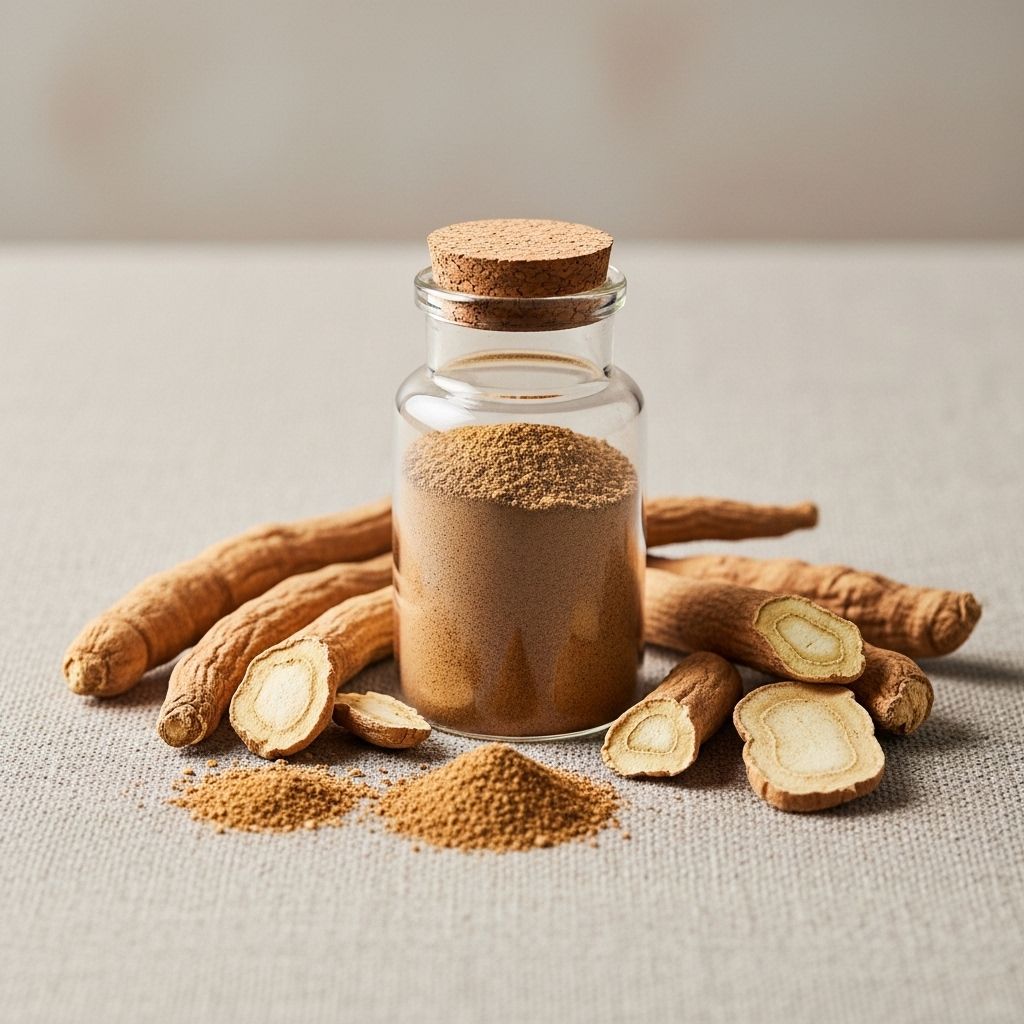
Ashwagandha Root Extract
Withania somnifera, known by its common name ashwagandha, is a botanical widely used within the Ayurvedic wellness tradition originating from the Indian subcontinent. It is classified as an adaptogenic plant in traditional wellness literature. Modern nutritional research has examined its general properties, with studies focusing primarily on physiological stress response markers and general well-being indicators.
- Subject of contemporary nutritional research into adaptogenic properties
- Commonly standardised to withanolide content for consistency
- Used as a food supplement under UK food law

B-Vitamin Complex
A formulation combining multiple water-soluble vitamins from the B group, typically including B1 (thiamine), B2 (riboflavin), B3 (niacin), B5 (pantothenic acid), B6 (pyridoxine), B7 (biotin), B9 (folate), and B12 (cobalamin). Authorised EU/UK health claims exist for several of these vitamins in relation to normal energy-yielding metabolism and the reduction of tiredness and fatigue.
- B1, B2, B3, B5, B6, B7, B9 and B12 contribute to normal energy-yielding metabolism
- B6, B9 and B12 contribute to normal homocysteine metabolism
- B12 and folate contribute to normal psychological function

Selenium
An essential trace mineral incorporated into selenoproteins, a family of proteins that play important roles in antioxidant defence mechanisms and thyroid hormone metabolism. Selenium is found naturally in Brazil nuts, seafood, meat, and cereals, though soil selenium content significantly influences food concentrations across different geographic regions, including the UK.
- Contributes to normal function of the thyroid gland
- Contributes to normal antioxidant processes within cells
- Supports the normal function of the immune system
Information Context and Scope
All entries on this page are informational descriptions of supplement categories. They are not product listings, recommendations, or endorsements. No products are sold or distributed by Qijolo.
Health claims referenced above reflect those authorised under UK/EU retained regulation and are included solely to illustrate the regulatory framework for supplement claims. They do not constitute advice to use any specific supplement.
Individual nutritional needs vary significantly. No general educational content can substitute for personalised professional guidance.